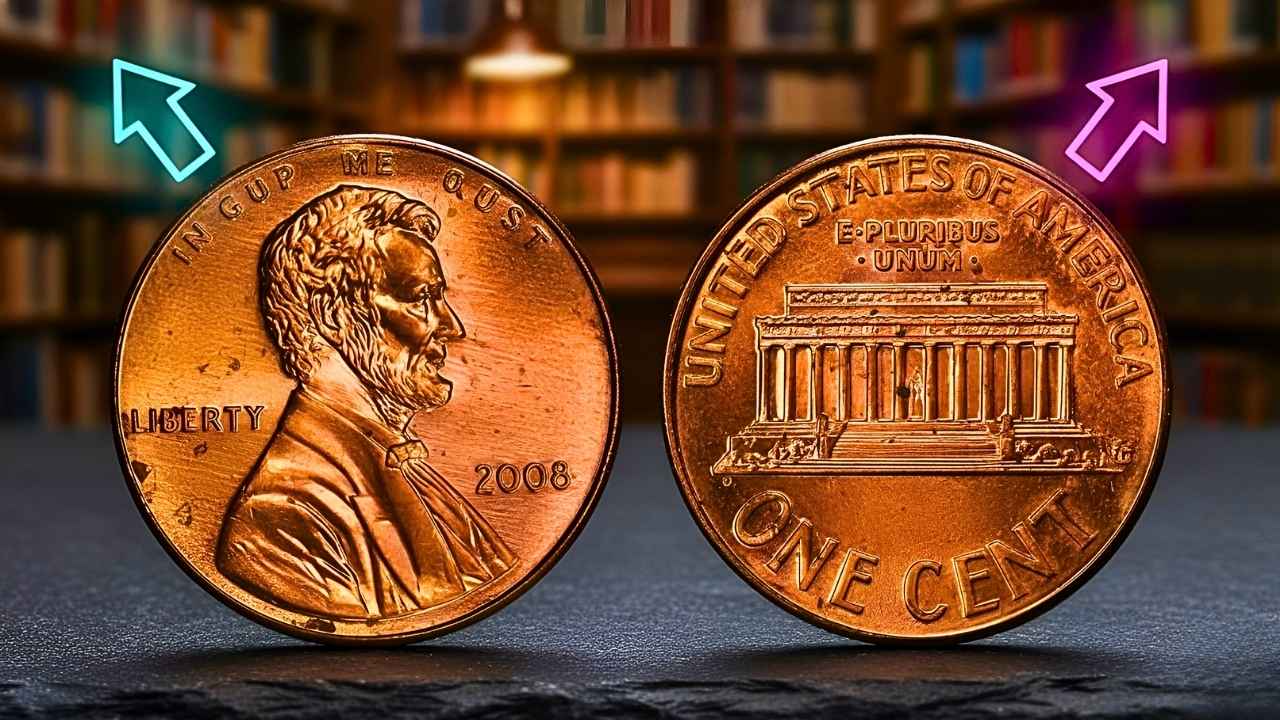
Lincoln Penny Value Guide 1959–2008: The Lincoln cent has been a cornerstone of American coinage since its introduction in 1909. Designed by Victor David Brenner, it was the first U.S. coin to feature a real person rather than a symbolic figure. In 1959, the reverse design changed from the iconic wheat ears to the Lincoln Memorial, marking the beginning of a new era. This design remained in circulation until 2008, making the Lincoln Memorial cent one of the most familiar coins in American pockets. While most examples are common and worth only face value, certain rare varieties and minting errors have made some Lincoln pennies from this period highly valuable.
The 1959-D Mule Error Penny
One of the most famous modern Lincoln cent rarities is the 1959-D mule error penny. This coin was mistakenly struck with a wheat reverse instead of the Lincoln Memorial design. Only a handful are known to exist, and their authenticity has been debated over the years. Nevertheless, the 1959-D mule penny remains a legendary rarity, with values reaching tens of thousands of dollars. Its story highlights the fascination collectors have with transitional errors and the thrill of discovering coins that should not exist.

The 1960 Small Date and Large Date Varieties
In 1960, the Mint produced Lincoln cents with two different date styles: small date and large date. These varieties occurred in both Philadelphia and Denver issues. Collectors prize the small date variety, especially in high grades, as it is scarcer than the large date. Proof versions of the 1960 small date cent are particularly valuable, with pristine examples commanding significant premiums. These varieties remind collectors that even subtle differences in design can create rare and desirable coins.
The 1970-S Small Date Penny
The 1970-S small date penny is another highly sought-after variety. Produced at the San Francisco Mint, this coin features a smaller date style that is less common than the large date version. Proof examples of the 1970-S small date penny are especially valuable, with high-grade specimens selling for hundreds or even thousands of dollars. Collectors often use magnification to distinguish between the two varieties, making the hunt for small date pennies a rewarding challenge.
The 1972 Doubled Die Obverse Penny
Error coins are among the most exciting finds for collectors, and the 1972 doubled die obverse penny is a prime example. The doubling is visible on the inscriptions, particularly “LIBERTY” and “IN GOD WE TRUST.” This error occurred when the die was improperly prepared, creating a striking variety that is highly prized today. Well-preserved examples can be worth hundreds or even thousands of dollars, depending on condition. The 1972 doubled die penny remains one of the most famous modern error coins.
The 1982 Copper and Zinc Transition
In 1982, the Mint transitioned from copper to copper-plated zinc planchets due to rising metal costs. This change created a fascinating variety of coins, as both compositions were produced during the year. Collectors prize the 1982 copper pennies, especially those with small date varieties. Identifying the composition requires weighing the coin, as copper cents are heavier than zinc cents. The 1982 transition highlights the impact of economic factors on coinage and the opportunities they create for collectors.

The 1983 Doubled Die Reverse Penny
Another notable error is the 1983 doubled die reverse penny. The doubling is visible on the reverse inscriptions, making it a striking variety. This coin is rare and highly collectible, with values reaching hundreds of dollars in high grades. The 1983 doubled die reverse penny demonstrates that even in modern times, minting errors can produce coins of significant value and interest.
The 1992 Close AM Penny
The 1992 close AM penny is one of the most famous modern rarities. On most Lincoln Memorial cents, the letters “A” and “M” in “AMERICA” are spaced apart. However, in the close AM variety, the letters are nearly touching. This variety occurred in both Philadelphia and Denver issues, though it is extremely rare. High-grade examples have sold for thousands of dollars, making the 1992 close AM penny a dream find for collectors.

The 1999 Wide AM Penny
In contrast to the 1992 close AM variety, the 1999 wide AM penny features a wider spacing between the “A” and “M” in “AMERICA.” This variety is rare and valuable, with high-grade examples commanding significant premiums. The wide AM penny was the result of a die mix-up, creating a coin that collectors eagerly seek. Together, the close AM and wide AM varieties highlight the importance of small design details in determining rarity and value.
The 2000 and 2001 Wide AM Pennies
Following the 1999 issue, wide AM varieties also appeared in 2000 and 2001 Lincoln cents. These coins are less rare than the 1999 wide AM penny but still valuable, especially in high grades. Collectors often search rolls of pennies in hopes of finding these varieties, making them popular targets for modern coin hunters. The wide AM varieties demonstrate that even recent coins can hold hidden treasures.

The Role of Condition and Grading
Condition plays a crucial role in determining the value of Lincoln pennies from 1959 to 2008. Coins are graded on a scale from 1 to 70, with higher grades indicating better preservation. Uncirculated and proof examples of rare varieties can be worth exponentially more than circulated coins. Professional grading services provide authentication and ensure that collectors can buy and sell with confidence. For investors and collectors alike, grading is essential to maximizing value.
Collecting Strategies for Modern Lincoln Pennies
Collectors approach modern Lincoln pennies in different ways. Some focus on acquiring all varieties, including small date, large date, close AM, and wide AM issues. Others seek high-grade examples, aiming for coins with exceptional eye appeal. Error coin specialists look for unusual varieties, while investors target coins with strong potential for appreciation. Whatever the strategy, the Lincoln Memorial cent series offers opportunities for collectors at all levels.

The Cultural Significance of the Lincoln Cent
Beyond its monetary value, the Lincoln cent holds cultural significance. It honors one of America’s greatest presidents and symbolizes the nation’s commitment to equality and progress. The Lincoln Memorial reverse design, introduced in 1959, reflects the importance of national unity and remembrance. For many Americans, the Lincoln cent is more than just currency; it is a piece of history carried in their pockets.
Conclusion
The Lincoln Memorial cent series, spanning from 1959 to 2008, offers collectors a rich field of exploration. From rare varieties like the 1959-D mule error to modern treasures like the 1992 close AM and 1999 wide AM pennies, these coins demonstrate the enduring appeal of numismatics. Their values, often reaching thousands of dollars, highlight the importance of paying attention to details and preserving history. For collectors and enthusiasts, the Lincoln penny is more than just a coin; it is a symbol of America’s heritage and a reminder that extraordinary treasures often hide in the most ordinary places.