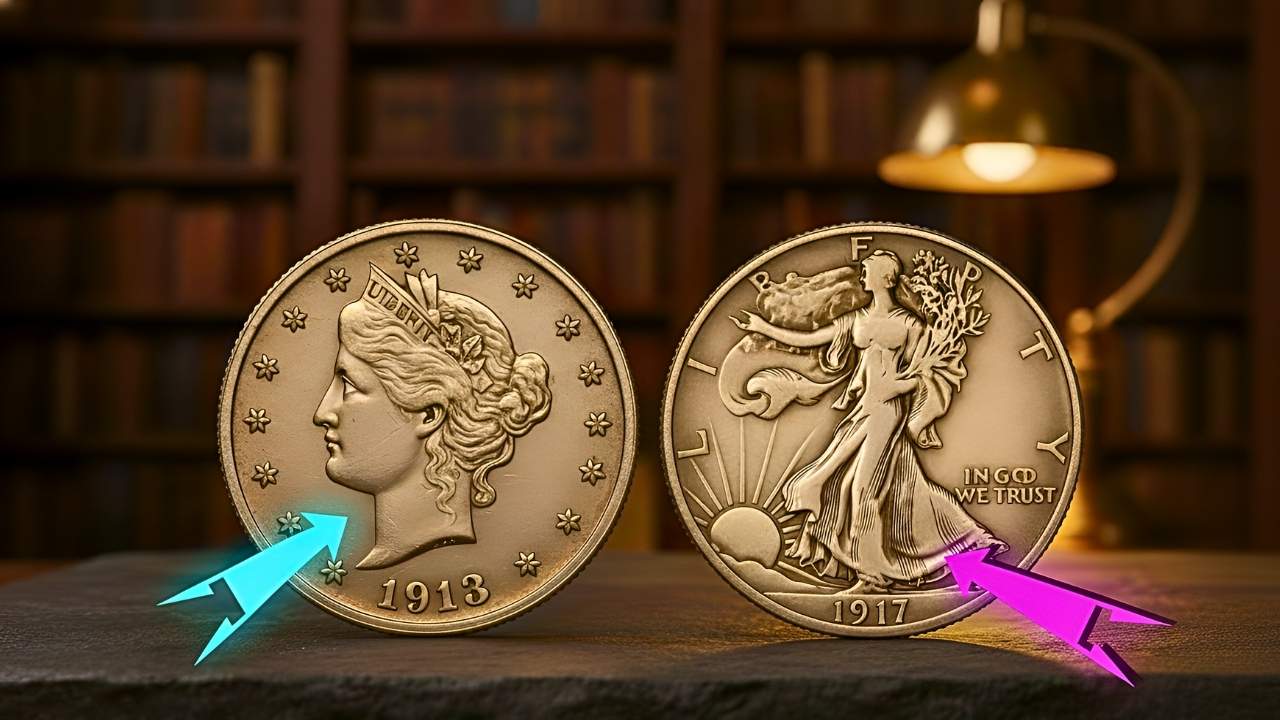
1917 Walking Liberty Half Dollar Worth Up to $175,000: The Walking Liberty Half Dollar, first introduced in 1916, is widely regarded as one of the most beautiful coins ever produced by the United States Mint. Designed by Adolph A. Weinman, the coin features Lady Liberty striding confidently toward the rising sun, draped in the American flag, with branches of laurel and oak in her hand. The reverse depicts a majestic eagle perched on a mountain pine. Collectors admire this coin not only for its artistry but also for its historical significance, as it was minted during a transformative period in American history.
The 1917 Issue and Its Importance
The 1917 Walking Liberty Half Dollar holds a special place in numismatics. It was the second year of issue for the series, and several varieties were produced that year. These varieties, combined with minting errors and condition rarity, have made certain 1917 half dollars worth extraordinary sums. While most examples are common and valued modestly, rare varieties in pristine condition can reach values as high as $175,000. This makes the 1917 issue one of the most exciting coins for collectors and investors alike.
Obverse Mintmark Variety
One of the most notable varieties of the 1917 Walking Liberty Half Dollar is the obverse mintmark placement. In 1917, the Mint experimented with placing the mintmark on the obverse, just below the motto “In God We Trust.” This was unusual, as mintmarks were typically placed on the reverse. The obverse mintmark variety was produced at the Denver and San Francisco Mints, creating the 1917-D and 1917-S obverse mintmark coins. These coins are highly collectible, especially in high grades, and can command significant premiums.
Reverse Mintmark Variety
Later in 1917, the Mint reverted to placing the mintmark on the reverse, below the eagle. This created another set of varieties, the 1917-D and 1917-S reverse mintmark coins. Collectors often seek both obverse and reverse mintmark varieties to complete their sets. The reverse mintmark coins are generally more common than the obverse varieties, but high-grade examples remain valuable. Together, these varieties highlight the transitional nature of minting practices in the early years of the Walking Liberty series.

Error Coins of 1917
Error coins are among the most exciting finds for collectors, and the 1917 Walking Liberty Half Dollar produced several notable errors. Off-center strikes, doubled dies, and planchet flaws occasionally occurred, creating unique coins that are highly prized today. These errors are rare, and their values depend on the type and severity of the mistake. Collectors are drawn to error coins because they represent rare accidents in the minting process, turning ordinary coins into extraordinary treasures.
Condition Rarity and Value
The value of a 1917 Walking Liberty Half Dollar depends heavily on its condition. Coins are graded on a scale from 1 to 70, with higher grades indicating better preservation. Circulated examples are relatively common and affordable, but uncirculated coins in pristine condition are rare and can be worth tens of thousands of dollars. The finest known specimens, graded at MS-67 or higher, have sold for up to $175,000 at auction. This demonstrates the importance of condition rarity in determining value.
The Role of Professional Grading
Professional grading services play a crucial role in the market for rare coins. Collectors and investors rely on grading to confirm authenticity and assess condition. A 1917 Walking Liberty Half Dollar certified by a reputable grading service carries greater credibility and value. Grading also helps protect buyers from counterfeits and ensures that coins are properly preserved. For coins worth thousands of dollars, professional grading is essential.
Collecting Strategies for 1917 Half Dollars
Collectors approach the 1917 Walking Liberty Half Dollar in different ways. Some focus on acquiring all varieties, including obverse and reverse mintmarks from both Denver and San Francisco. Others seek high-grade examples, aiming for coins with exceptional eye appeal. Error coin specialists look for unusual varieties, while investors target coins with strong potential for appreciation. Whatever the strategy, the 1917 issue offers opportunities for collectors at all levels.

The Cultural Significance of the Walking Liberty Design
Beyond its monetary value, the Walking Liberty Half Dollar holds cultural significance. Weinman’s design symbolizes freedom, progress, and strength, capturing the spirit of America during the early 20th century. The design was so admired that it was later revived for the American Silver Eagle bullion coin, introduced in 1986. This continuity underscores the enduring appeal of the Walking Liberty motif and its place in American numismatic history.
Viral Stories of Rare Discoveries
Part of the fascination with the 1917 Walking Liberty Half Dollar comes from stories of rare discoveries. Collectors occasionally uncover valuable varieties in old collections, estate sales, or even pocket change. These stories often go viral, inspiring others to examine their coins more closely. The idea that a coin worth up to $175,000 could be hiding in plain sight captures the imagination and fuels interest in numismatics.

Lessons from Rare Coin Collecting
The story of the 1917 Walking Liberty Half Dollar teaches important lessons for collectors and investors. It highlights the importance of paying attention to details, such as mintmark placement and condition. It underscores the role of professional grading in protecting value. Most of all, it shows that coins are more than currency; they are pieces of history that connect us to the past. Collecting rare coins is not just about financial gain but also about preserving cultural heritage.
Conclusion
The 1917 Walking Liberty Half Dollar is a coin of beauty, history, and immense value. With varieties ranging from obverse and reverse mintmarks to rare error coins, it offers collectors a rich field of exploration. Condition rarity ensures that the finest examples can reach values up to $175,000, making them dream finds for numismatists. Beyond their monetary worth, these coins symbolize freedom and progress, reminding us of the enduring power of art and history in American coinage. For collectors and investors alike, the 1917 Walking Liberty Half Dollar remains one of the most captivating treasures in numismatics.